Truck-mounted generators: how a mobile power unit is actually specified
A mobile power unit is not a genset dropped into a box body. It has to arrive, level itself, run cable and close the breaker within half an hour — and the set has to survive road shock, a confined air path and a fuel tank that tilts. Below: configuration by power band, six engineering points that decide whether it works, low voltage versus medium voltage, and who is responsible for the vehicle itself.
 Real units we have built
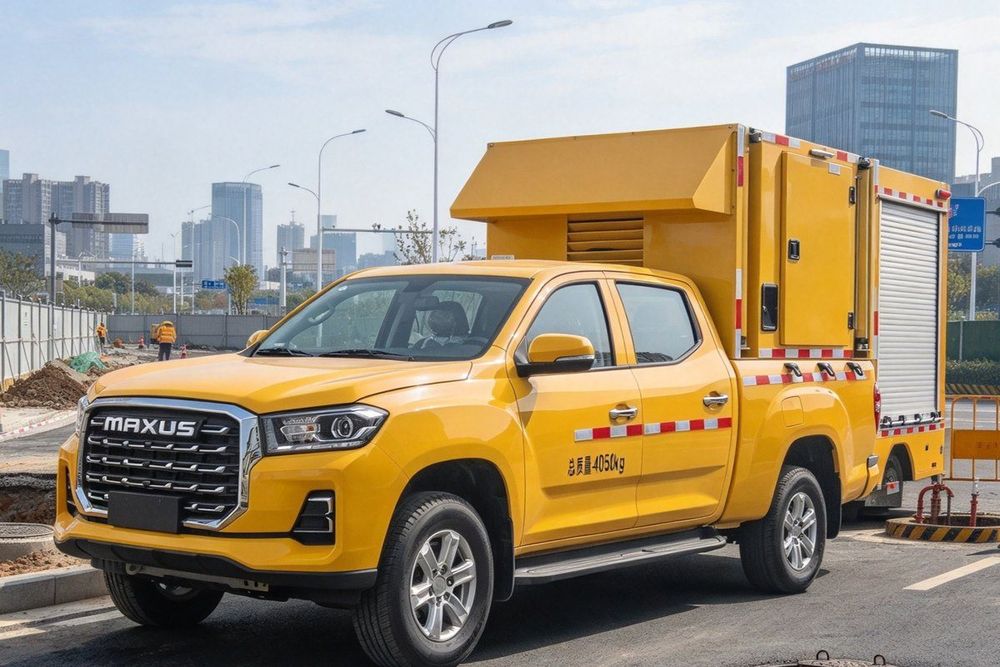
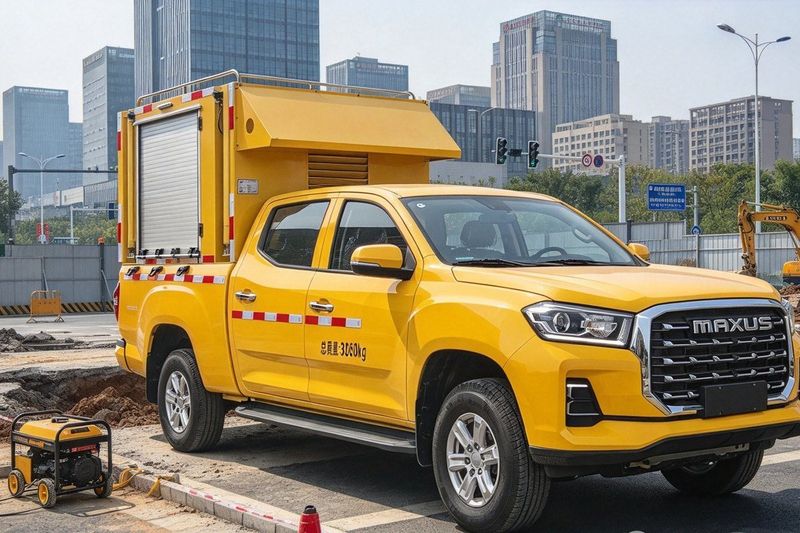
Pickup-mounted emergency power unit: 4,050 kg GVW, roller shutter and service doors at the rear, reflective banding. Municipal repair, telecom sites and small events, typically 20–100 kW.
Four formats, not four ratings. The format decides whether the unit can be registered, shipped as cargo, or pushed by one man; the rating decides the set inside. Below 100 kW it is usually a pickup; 100–500 kW goes on a truck or a twin-axle trailer; above 800 kW it is a container or a semi-trailer. Colour and livery follow the customer — the photos show the format, not a fixed specification.
What a mobile power unit is made of
Six assemblies decide whether the unit is usable, and they are exactly where quotations diverge:
| Assembly | Function | Where cost is wrongly cut |
|---|---|---|
| Chassis | Carries the load and provides mobility | An under-rated GVW chassis: the finished vehicle is overweight and cannot be registered |
| Genset | Engine, alternator, radiator | Dropping a stationary set in: the standard fan cannot overcome duct static pressure, so it derates hot |
| Body | Acoustic lining, weather protection, air path, service doors | Sizing air openings from plant-room experience; the body goes negative and hot air recirculates |
| Distribution | Breakers, metering, protection, paralleling interface | A single output feed only, with no way to split on site later |
| Hydraulic outriggers | Level the vehicle and turn it into a rigid base | Outrigger spread narrower than the wheel track: it rocks on soft ground and the set trips on protection |
| Cable reel | Fast payout and rewind, 30–100 m | Cable sized on ampacity without a voltage-drop check; 100 m later the terminal voltage fails |
Prefer paper? The four sector briefs — hospital, data centre, events, emergency response — are also available as one-page A4 PDFs, in English and Chinese.
The first two decide whether it runs. The last four decide whether anyone wants to use it. A tender that says only "500 kW mobile generator vehicle" and leaves these four open will receive four different machines at four different prices.
Six power bands, and what each one needs
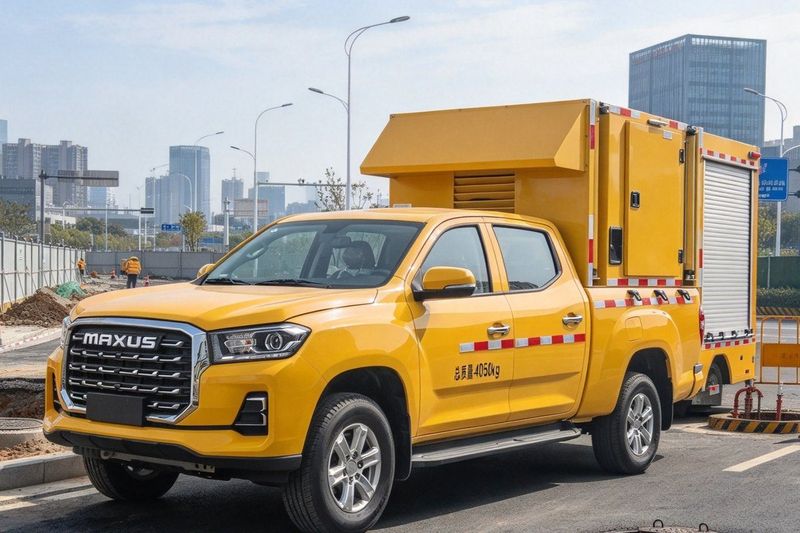 20–150kW
LV band · light truck
- Chassis
- Light truck 4×2
- Set
- Open frame in a box body; body does the acoustic work
- Body
- Box body, one service door
- Lead time
- 25–40 days
- Duty
- Municipal repair, telecom sites, small events
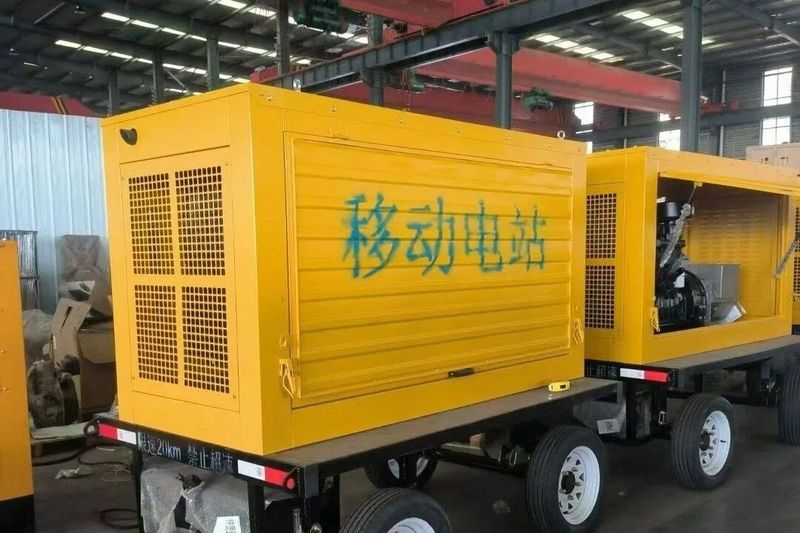 150–200kW
LV band · medium truck
- Chassis
- Medium truck 4×2
- Set
- Silent canopy set on vehicle isolators
- Body
- Acoustic body, front and rear doors, 50 m reel
- Lead time
- 35–50 days
- Duty
- Hospital and data-centre standby, repair crews
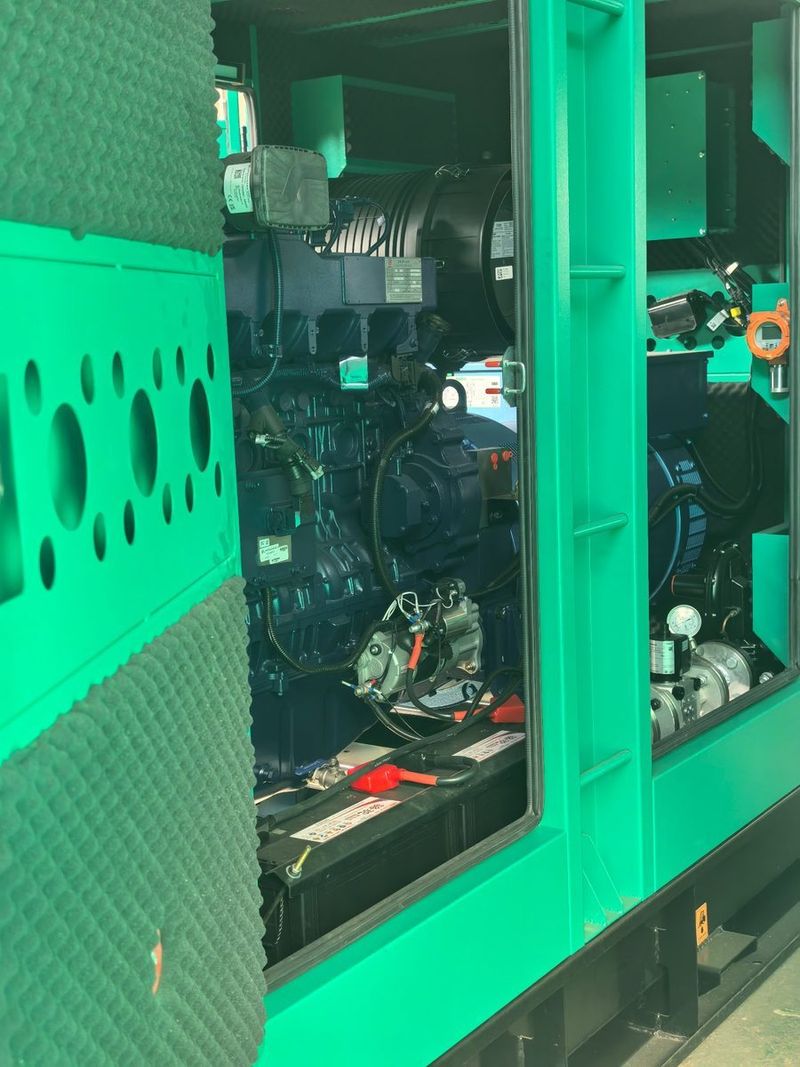 200–500kW
LV band · heavy truck
- Chassis
- Heavy truck 6×4
- Set
- Silent set with high-static-pressure fan
- Body
- Acoustic body, hydraulic outriggers, 100 m powered reel
- Lead time
- 50–70 days
- Duty
- Grid maintenance, large sites, events
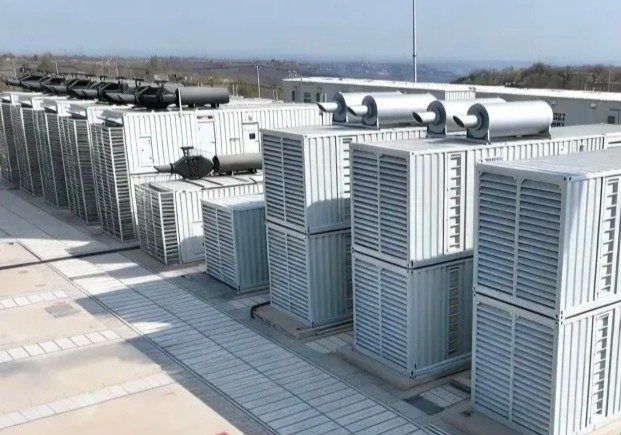 500–800kW
LV band · three-axle or semi
- Chassis
- Three-axle truck or semi-trailer
- Set
- One large set, or two sets paralleled
- Body
- Twin-bay body with synchronising panel
- Lead time
- 70–90 days
- Duty
- Substation support, regional emergency depots
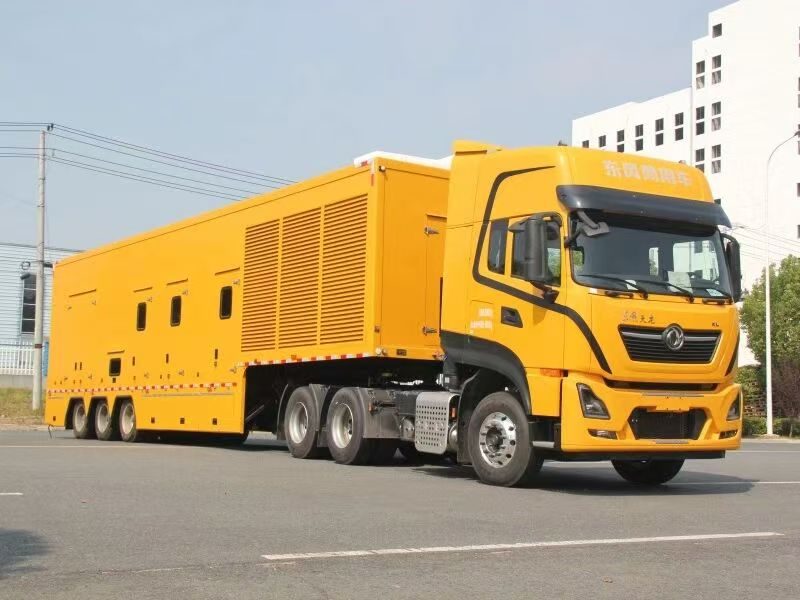 800–1100kW
MV band · semi-trailer
- Chassis
- Mostly semi-trailer
- Set
- LV set + step-up transformer, or an MV alternator
- Body
- 6.6 / 11 kV switching and protection
- Lead time
- 90–120 days
- Duty
- Urban distribution bypass, major events
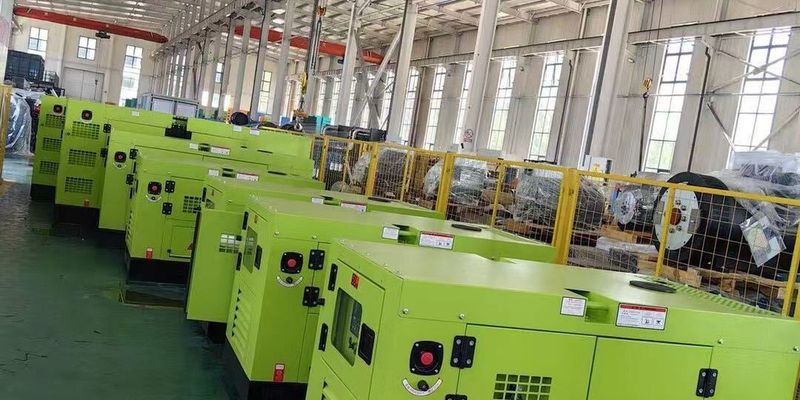 1100–3000kW
MV band · multi-axle
- Chassis
- Multi-axle semi-trailer
- Set
- MV sets with synchronising system
- Body
- Rapid connectors, protection settings
- Lead time
- 120+ days
- Duty
- National emergency fleets, bypass work
Card photos show the set and switchgear package for that band, except the 800–1100 kW card, which is a finished semi-trailer vehicle; otherwise vehicle appearance depends on the chassis and body builder. Lead times are the number to read first: chassis allocation, body production and type approval all queue, so urgent procurement is almost always a project approved six months earlier.
Six requirements a vehicle-mounted set must meet
1. Cooling: size the air path, not the room
In a plant room air is free. In a body there are two openings — intake louvre and discharge louvre — and nothing else. Once the body runs negative, hot air comes back through the discharge. Three rules: intake free area at least 1.5× the radiator face area; intake and discharge never on the same side at the same height; a high-static-pressure fan instead of the standard one. Above 40 °C ambient, apply the manufacturer's derating curve — do not bid the 25 °C nameplate figure.
2. Vibration: road shock, not just running vibration
A stationary set is isolated against its own running vibration. A vehicle also takes potholes and emergency braking. Use two stages: rubber isolators between set and chassis, then a second stage under the fuel tank, battery rack and control panel. All pipework must be flexible — rigid runs crack at the weld after a few thousand kilometres, and that is the most common oil leak on vehicle-mounted sets.
3. Fuel: eight hours at full load, and no air pickup
On-board tanks are normally sized for eight hours at rated load. If fuel is drawn from the chassis tank, an anti-surge arrangement is mandatory: on a gradient the fuel surface tilts, the pickup uncovers and the engine takes air. Nobody notices at acceptance; it fails on the first mountain road.
4. Earthing: the neutral arrangement must match the site
The most overlooked item, with the worst consequences. Whether the site is TN-S or IT, whether earth-leakage protection is required, and how the neutral is handled when paralleling — all of it must be decided before the distribution panel is built. Afterwards it means rebuilding the panel.
5. Noise and ingress: every step costs money
65–70 dB(A) at 7 m is the normal acoustic specification; going below 60 means thicker lining, silencers on both air paths and better door seals, with cost and weight rising together. The price gap between IP44 and IP54 is often larger than upgrading the engine brand by one tier — specify to the actual environment, not to the highest number available.
6. Emission platform: pick the market first, then the engine
On-road and industrial diesel engines sit under different regulatory regimes — China VI for domestic registration, Stage V, Euro II or no requirement depending on destination. The wrong platform can fail type approval or fail customs. Settle it before the quotation, not after the contract.
Low voltage or medium voltage
| LV 400/415 V | MV 6.6 / 11 kV | |
|---|---|---|
| Practical limit | Up to about 800 kW | From about 800 kW upward |
| Current at 800 kW | ≈1150 A — heavy, stiff cable | ≈70 A — thin, long runs are practical |
| Implementation | Direct from alternator | LV set + step-up transformer, or an MV alternator |
| Site requirement | Anyone can connect it | MV interface plus certified operators |
| Weak point | Voltage drop over long cable runs | Cost, weight, and operator competence on site |
The decision rule is simple: if cable runs regularly exceed 50 m, or a single unit exceeds 800 kW, go MV. If it is short-range urban standby work, forcing MV is buying trouble — nobody on site can operate it and the connectors do not match.
Four site types, and how each one changes the specification
The same vehicle, specified for two different sites, comes out with a different rating, a different body and a different reel. These four cover most of the enquiries we handle:
Municipal and utility repair
The photo shows a pickup-mounted unit, typically 20–100 kW; above that it moves to a medium truck. Quiet enough for night work in a city, reel from 50 m, fast-opening single-side doors. Arriving on load in 20 minutes is worth more than 50 extra kW.
Construction sites
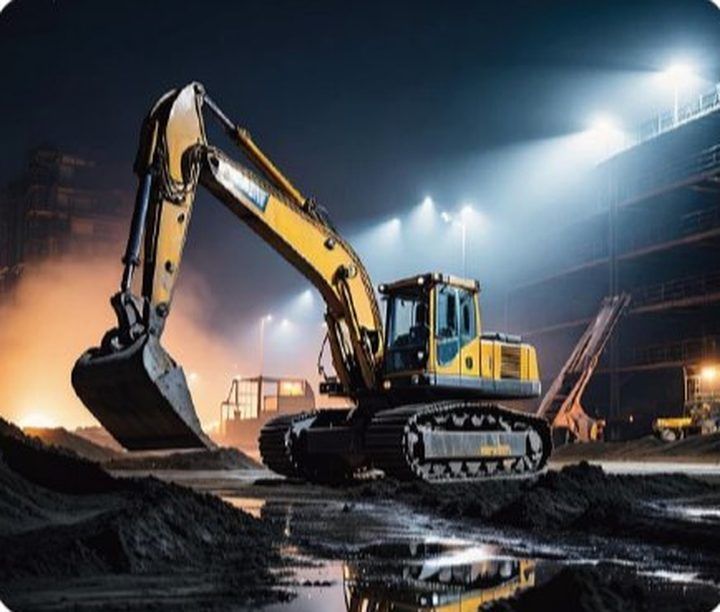
200–500 kW heavy-truck band. Soft ground demands hydraulic outriggers with a wider spread, dust demands pre-filters and mesh, and the tank is sized to one full shift at load.
Mining and tunnels
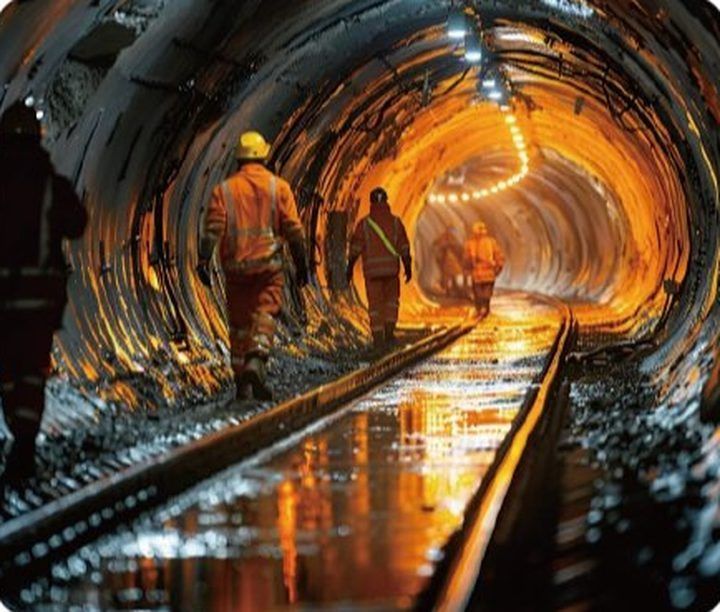
High load steps — rate the set on prime power, not standby. Gradients and vibration mean an anti-surge tank arrangement and flexible pipework throughout.

Ports and terminals
400–800 kW is common. Salt mist and humidity drive body corrosion protection and panel ingress rating; IP54 minimum, with terminals treated against moisture.
Site photos are real installations. Three different ratings quoted for the same site is normal — size from the load list first, correct for site conditions, and only then choose the format and body.
By sector: four duty profiles that change the specification
A hospital asks about transfer and exhaust, a data centre about UPS step load, a show about noise and dual feed, and a response team about minutes to first load. Each of these pages sets out the calculation, the connection and the acceptance test for its own sector.
Hospital standby 200–800 kW
- Size on critical + fire load, never on transformer capacity
- UPS covers the first minutes; the vehicle covers the hours after
- A rapid connection box is the difference between no outage and 15 minutes
- Hospital standby sizing →
Data centre and UPS step load 1000–2000 kW
- The threshold is the UPS step, not the total kW
- 1.4–1.6× the UPS rating, or a confirmed walk-in ramp
- 10 kV: phase check, protection settings, anti-islanding
- Data centre sizing →
Events and stadiums 200–1200 kW
- Three load factors: simultaneity, power factor, margin
- Dual feed plus UPS, critical loads within 10 ms
- Noise is solved by distance and barriers, not thicker panels
- Event power sizing →
Emergency response 20–400 kW
- The metric is minutes to first load, not kilowatts
- −25 °C starting, IP5X dust, off-road vibration
- Trailers deploy fastest and export most easily
- Response vehicle selection →
Who builds the vehicle: state the boundary in the contract
A mobile power unit is a road vehicle. Type approval requires a dedicated-vehicle manufacturing licence, which we do not hold. Our scope is the set and the on-board electrical package. Three ways to structure a project, and the contract must say which one applies:
| Model | We supply | Partner supplies | Fits |
|---|---|---|---|
| A. Set only | Genset, control panel, documents, factory load test | Body, distribution, outriggers, reel, type approval | Licensed body builders and power-vehicle manufacturers |
| B. Set + on-board package | Above plus tank, isolation, quick connectors, reel, outriggers | Chassis purchase, body build, approval and registration | Builders with chassis access but no electrical integration |
| C. Package delivery (consortium) | Set and electrical package, commissioning, after-sales | Vehicle manufacture, approval, registration | End users and emergency projects |
Saying this out loud wins more projects than a 5 % discount. What buyers fear is not the price — it is discovering after signature that nobody owns the type approval, so the finished vehicle cannot be registered.
How the price is built
- Set and on-board package — 15–30 % above the equivalent silent set, covering the vehicle tank, isolation, quick connectors, reel, outriggers and a shock-resistant control panel.
- Chassis and body — priced by GVW and body build; we can source it or the client supplies it. Transparent, but the spread between suppliers is wide.
- MV and paralleling — step-up transformer, MV switchgear, paralleling panel and protection settings, quoted as a separate package.
Indicative complete-vehicle ranges, excluding tax and freight: 200 kW class USD 35,000–55,000; 400 kW class USD 63,000–98,000; 800 kW class USD 126,000–196,000. The spread is wide because chassis brand, body workmanship and acoustic target differ enormously — the same 400 kW unit can vary by a factor of two.
Tender specification: six clauses that prevent disputes
- State both prime and standby ratings, and say which one is tested.
- State ambient temperature and altitude, and require a derating statement for those conditions.
- State the free area of the body's air openings — without it, hot-weather derating becomes an argument nobody wins.
- State cable size and length, and require voltage drop at full load to be under 5 %.
- State the earthing arrangement and how the neutral is handled when paralleling.
- State who owns type approval and registration, in the contract annex, by name.
Questions buyers ask
How is a mobile power unit different from a containerized generator?
A container unit is stationary or crane-lifted: it lands, you connect cable. A power vehicle drives itself to site, levels on outriggers and pays out cable. For the same rating it costs 40–80 % more, and the difference is the chassis, body, outriggers, reel and type approval — not the generator.
What ratings are practical?
Four working bands: 20–150 kW on light truck chassis, 150–200 kW on medium, 200–500 kW on heavy 6×4, 500–800 kW on three-axle or semi-trailer. Above 800 kW most projects go MV at 6.6 or 11 kV, and 1100–3000 kW is almost always semi-trailer format with a step-up transformer or an MV alternator.
Can you deliver a complete vehicle?
No — and we say so in writing. Complete vehicles need a dedicated-vehicle manufacturing licence and type approval, which we do not hold. We deliver the set, distribution, control, outriggers and reel; body build and approval are done by a licensed partner. We also supply sets directly to licensed builders.
How fast can it be on load after arrival?
Outriggers down and levelled in 5–10 minutes; cable payout about 10 minutes for a 30 m run; then start, warm-up and close. A trained operator is on load in 20–30 minutes. An MV unit with automatic paralleling and pre-matched quick connectors can do it in under 15 — provided the site interface was matched beforehand.
Does altitude or cold weather change the specification?
Yes, and it must be written into the technical agreement. Cold climates need oil and coolant pre-heating and battery insulation. Naturally aspirated engines lose roughly 3 % per 300 m above 1000 m, so either apply the manufacturer's correction or specify a turbocharged platform.
Four bands, four different constraints
This page is the overview. In practice each band hits a different wall — payload on a pickup, plates on a truck, cable on medium voltage, regulation on a trailer. So each band has its own page:
| Band | The constraint that decides it | Read |
|---|---|---|
| 20–200 kW | Rear axle payload: a 4,050 kg pickup cannot legally carry 100 kW | Pickup and light truck |
| 200–500 kW | Yellow plate: B2 licence, city daytime bans; one 500 kW set or 2×250 kW | Truck-mounted |
| 800–3000 kW | Cable mass: eight 240 mm² cores at LV versus one 35 mm² at 10.5 kV | Medium voltage |
| 20–800 kW | Regulation: a towed unit is not a motor vehicle and needs no type approval | Trailer-mounted |
Related pages
20–200 kW pickup ·
200–500 kW truck ·
800–3000 kW medium voltage ·
trailer-mounted stations ·
hospitals ·
data centres ·
events ·
emergency response
silent canopy gensets ·
containerized modules ·
price guide ·
export and shipping ·
sector briefs (PDF) ·
choosing a supplier ·
maintenance contracts ·
all sets 8–4000 kVA
Need a set-and-package proposal for a power vehicle?
Tell us the rating, duty, destination market and whether MV is required. You get the set configuration, the on-board package list and a price range the same working day.